How to Recover Unclaimed Safe Deposit Box Contents
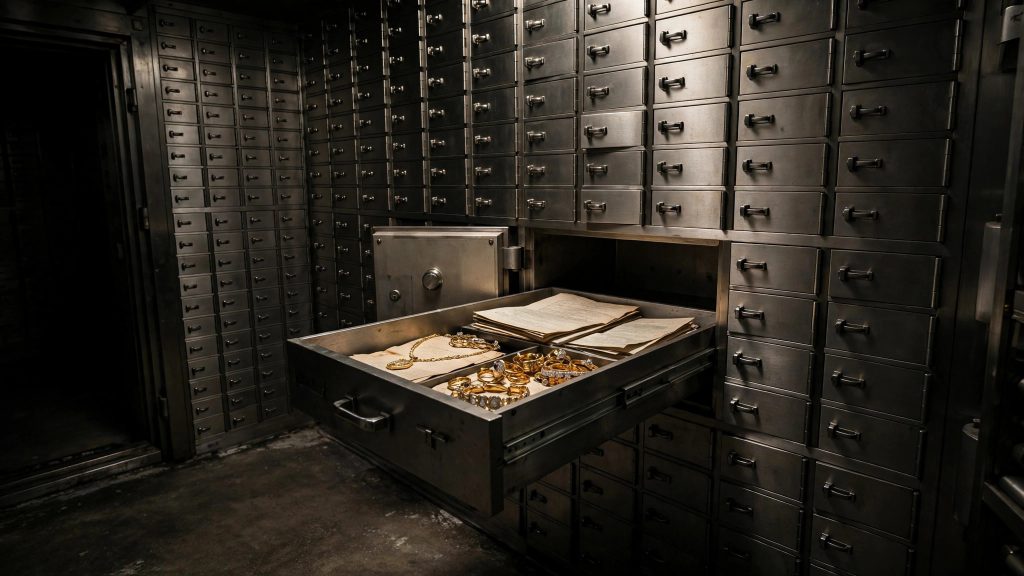
Most unclaimed property is money — forgotten bank accounts, uncashed checks, insurance payouts. But some of it is physical: the contents of abandoned safe deposit boxes. Jewelry, coins, documents, heirlooms, and occasionally cash, all sitting in state vaults waiting for owners who may not even know the box existed.
Safe deposit box contents follow a special path through the unclaimed property system, with rules that differ from ordinary cash claims. This article explains how boxes end up with the state, what happens to the contents, and how owners — or their heirs — can get them back.
How Safe Deposit Boxes Become Unclaimed Property
A safe deposit box becomes “abandoned” when the rental fees go unpaid for a statutory period — typically three to five years, depending on the state — and the bank cannot locate the owner. Before the box is turned over, the bank is generally required to make a good-faith effort to contact the owner at the last known address.
Once the dormancy period expires, the bank drills the box open (yes, literally), inventories the contents in the presence of witnesses, and ships everything to the state’s unclaimed property office. From that point, the contents are unclaimed property like any other — searchable in the state database, usually under the box owner’s name.
What the State Does With Box Contents
This is where safe deposit boxes differ sharply from cash claims:
Everything is inventoried. The state creates a detailed inventory of each box’s contents — every ring, coin, document, and photograph is cataloged. This inventory becomes the basis for any future claim.
Cash is deposited; property is stored. Any cash found in the box is deposited into the state’s unclaimed funds account. Physical items go into secure state storage — vaults or warehouses maintained for this purpose.
Some items may be sold. Here is the part that surprises people: most states are authorized to sell the contents of unclaimed safe deposit boxes after holding them for a specified period, often one to three years. Jewelry, coins, and collectibles may be auctioned, with the sale proceeds credited to the owner’s unclaimed property account. The owner can still claim the proceeds — but the original items are gone.
Documents are usually preserved. Paper items — deeds, stock certificates, military discharge papers, family records — are typically retained rather than sold, since they may be essential to proving ownership of other assets.
The Clock Matters More for Boxes Than for Cash
With an ordinary unclaimed bank account, the money sits indefinitely and you can claim it whenever you discover it. With safe deposit box contents, delay has a real cost: once the state auctions the items, you can only recover the sale proceeds — often less than the items were worth, and never the sentimental value.
If you suspect a relative had a safe deposit box — a parent or grandparent who banked at an institution that has since merged or closed — search the state’s unclaimed property database under their name now, not later. Bank mergers complicate the trail: the box may have been reported under the original bank’s records, and the current institution may have no knowledge of it.
How to Claim Box Contents
The claim process resembles an ordinary unclaimed property claim, with a few extras:
- Search the state database under the box owner’s name — current and former names, as with any unclaimed property search.
- File the claim with the state’s unclaimed property office, providing the standard identity and ownership documentation.
- Prove your connection to the box. The state will compare your documentation against the inventory. For heirs, this means the usual probate paperwork plus evidence linking the deceased to the box.
- Arrange to receive the property. Unlike a check in the mail, physical items may need to be picked up in person or shipped with insurance — the state will explain the options.
If the items were already sold, your claim is for the sale proceeds held in the owner’s account. Ask the state for the auction records — you have a right to know what the items brought.
Special Situations
Heirs and estates. Safe deposit boxes are among the most common surprises in estate administration. A deceased relative may have rented a box decades ago and never mentioned it. When searching for a parent’s or grandparent’s unclaimed property, always check for box contents specifically — some state databases list them as a separate property type.
Military personnel. Service members who deployed with boxes rented near a duty station are a classic case — the box outlived the assignment, the address went stale, and the contents went to the state.
Firearms and restricted items. If a box contained firearms, the state follows applicable firearms laws for their return or disposition. Expect additional procedures and background checks.
Items of primarily sentimental value. Photographs, letters, family bibles — these are the items states try hardest not to sell, and the items owners most want back. If the inventory lists such items, say so explicitly in your claim and ask about expedited handling.
Preventing the Problem
If you rent a safe deposit box today: keep the rental current, make sure the bank has your current address, tell a trusted family member the box exists and where it is, and keep a personal inventory (with photographs) of the contents at home. A box nobody knows about is a box that will eventually be drilled.
The Bottom Line
Safe deposit box contents are unclaimed property with a deadline that matters — once the state sells the items, the originals are gone for good. If there is any chance a box existed in your family’s history, search now. The inventory is waiting; the auction block should not be.
Think a family member may have left a safe deposit box behind? Center for Asset Recovery searches for unclaimed property — including box contents — under every name variation, for free. Call (479) 412-9810 or visit centerforassetrecovery.com.